
MAL Intensifies Efforts in Coconut Rhinoceros Beetle (CRB) Bio-Control Initiatives
MAL Intensifies Efforts in Coconut Rhinoceros Beetle (CRB) Bio-Control Initiatives
The Ministry of Agriculture and Livestock (MAL) has intensified its efforts to control and mitigating the impact of the destructive pest, the Coconut Rhinoceros Beetle (CRB) across the whole of Solomon Islands.
The MAL in collaboration with the New Zealand Government is pleased to provide updates on its ongoing CRB bio-control efforts aimed at mitigating the impact of this destructive and deadly coconut and palm oil pest in the country.
This follows successful awareness and control campaigns conducted in the previous years, including 2021, MAL in 2024 has intensified its efforts through the following targeted bio control methods, Sanitation, Fungus, and Virus releases with continued funding assistance from MFAT & SIG.
- CRB Sanitation Efforts: CRB Sanitation involves the meticulous removal of dead standing and lying palms, along with the collection of dead leaves in and around plantations. All debris is gathered and disposed of by burning on-site, significantly reducing beetle breeding sites and the overall beetle population. Ongoing sanitation efforts are being conducted in the following areas:
Table 1. CRB Sanitation
| Province | Work progress |
| Choiseul | In progress |
| North Malaita | Progress underway |
| Central Malaita | Clean up and virus release ongoing |
| Southern road of Malaita | Sanitation and Beetle Virus release completed |
| Ranogga, Western | Gizo team activities ongoing |
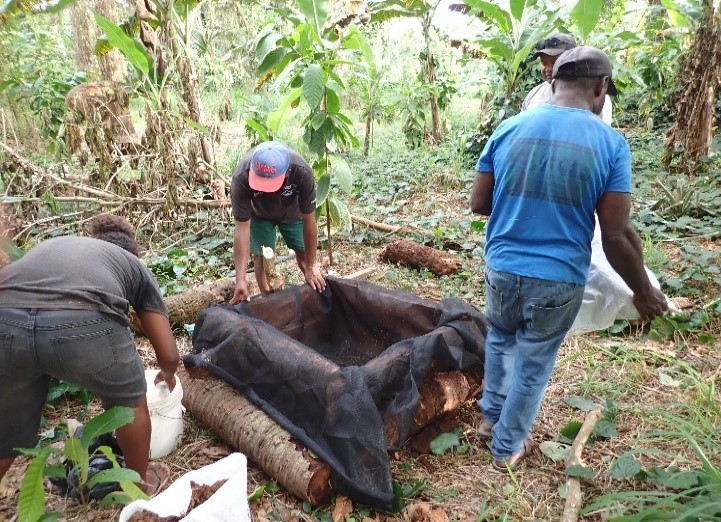
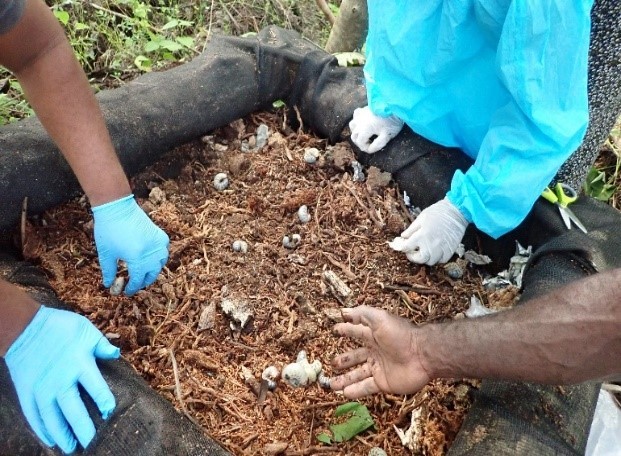
- CRB Fungus Release: The biocontrol agent Metarhizium majus, a fungus known to attack the CRB during its larval and adult stages, is being deployed to control the beetle population. MAL officers have set up Artificial Breeding Sites (ABS) in plantations, which are inoculated with the fungus to attract and eliminate CRB. The following locations are currently involved in the fungus release:
Table 2. CRB Fungus
| Province | Work progress |
| Bellona Island | Ready for fungus release |
| West Guadalcanal (Mamara to San Isidro School) | Fungus release completed |
| West Guadalcanal (Lambi region) | Ready for fungus release |
| East Guadalcanal (Marau region) | Fungus release completed |
- Virus Release Initiatives: The Oryctes nudivirus strain v23b is another crucial element in the CRB bio-control strategy. Adult beetles are trapped using pheromone traps, introduced to the virus in a laboratory setting, and then released back into the wild. These infected beetles spread the virus to healthy beetles, ultimately leading to a decrease in the adult population as the virus attacks their digestive system. Virus release sites include:
Table 3. Virus Release
| Province | Work progress |
| Temotu | |
| South Malaita | |
| Rennel | |
| Savo | |
| East Guadalcanal | Beetle Virus release completed at GPOL 1, 2 & 3. |
| Munda & Noro | |
| Makira Ulawa & Ugi |
MAL remains committed to combating the CRB threat through these comprehensive bio-control measures and therefore wish to thank the New Zealand Government for the funding support that will safeguard the nation’s coconut and oil palm industries from further devastation.
with photos:
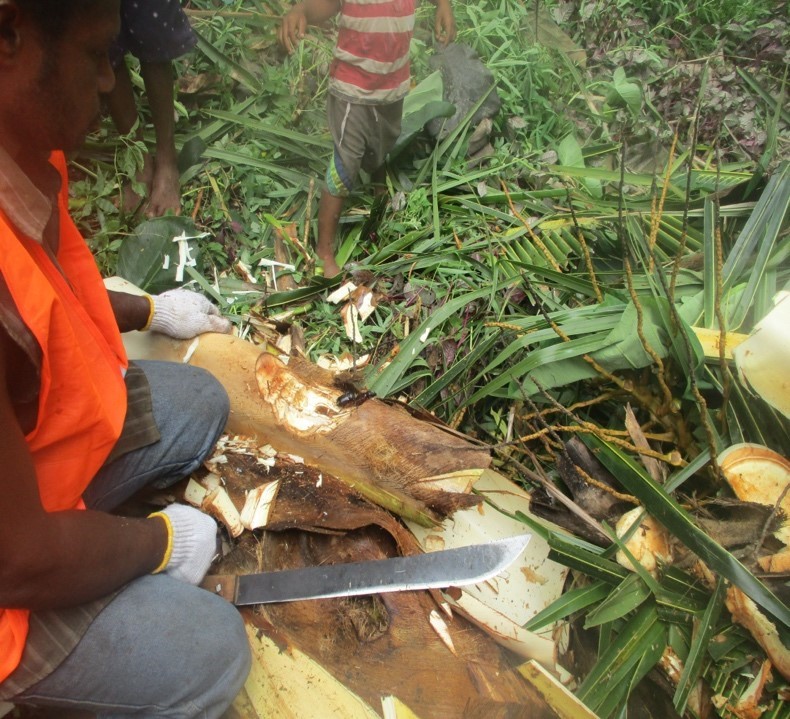
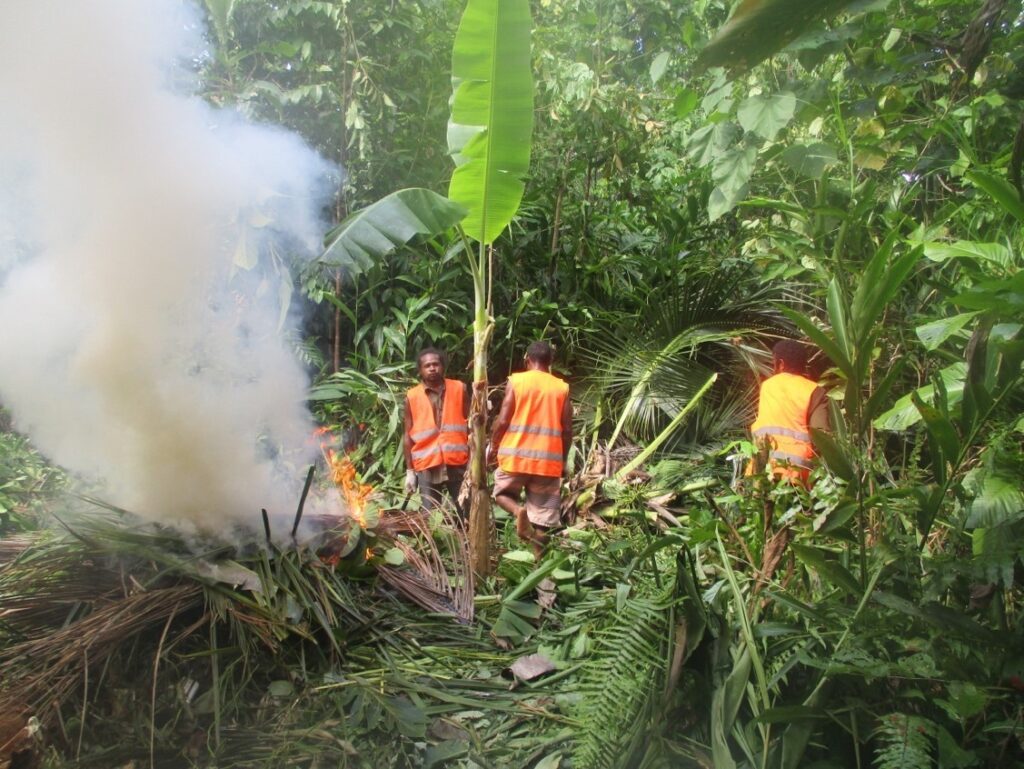
Above: The clean-up team cuts down dead standing palms and collects dead leaves and rubbish that could become potential breeding sites for CRB. Felled logs are collected along with the rubbish and burned on the plantation.
Below: Preparation of Artificial breeding sites (ABS)and adding live larvae in inoculated ABS.
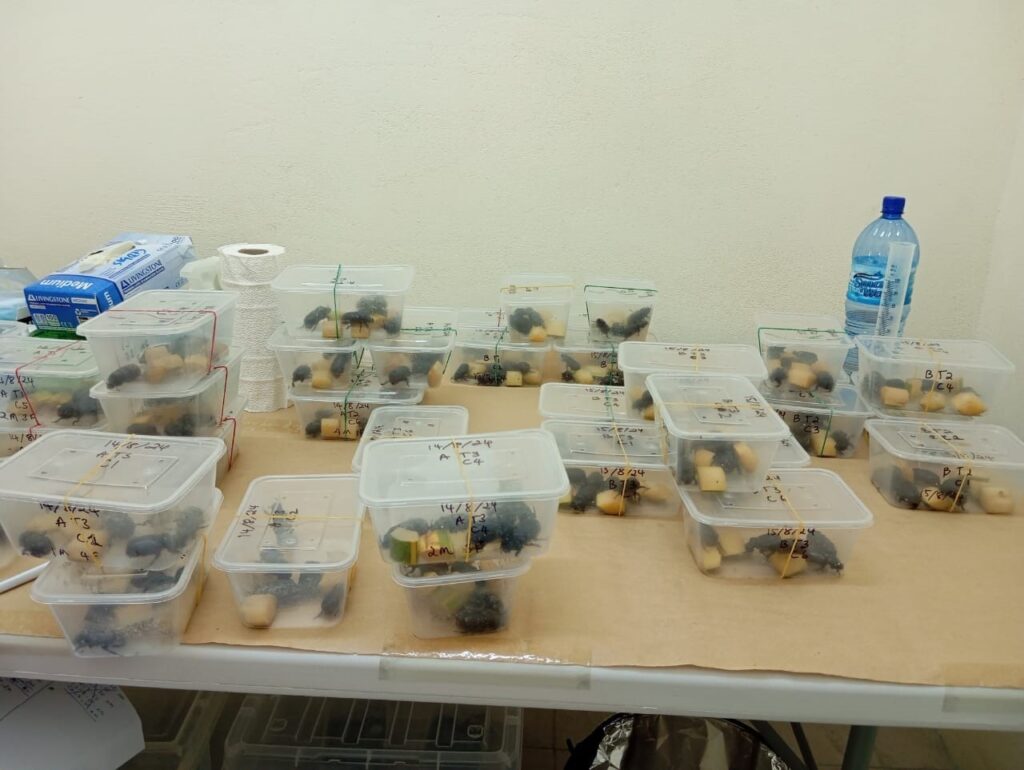
Infecting Adult beetles through feeding with oryctes nudi virus strain v.23b.
End///
Legal Disclaimer:
EIN Presswire provides this news content "as is" without warranty of any kind. We do not accept any responsibility or liability for the accuracy, content, images, videos, licenses, completeness, legality, or reliability of the information contained in this article. If you have any complaints or copyright issues related to this article, kindly contact the author above.
